From owl calls in mountain forests to native plant restoration, Bren student Alicia Magliato shares a journey shaped by wildfire research, conservation, and a deep commitment to California’s ecosystems future.
From scuba diving to seafood economics, UCSB’s Dan O’Shea navigates the blue economy, balancing ocean conservation, local livelihoods, and global trade along California’s coast, while championing local seafood access equity.
From New England seasons to Santa Barbara bluffs, Bella Pucker’s path winds through conservation, data, and community — finding purpose where people, policy, and landscapes meet at UCSB and beyond the future.
Four Bren alumni helped shape a landmark Microsoft–Indigo Carbon deal delivering 2.85 million tons of soil carbon removal, advancing regenerative agriculture and high-integrity carbon markets at unprecedented scale, nationwide impact.
As wildfires grow more frequent and severe across California, three Bren alumni are helping build the state’s frontline defense. Through the Wildfire County Coordinator Program, Lara Buluç (MESM ’09), Anne-Marie Parkinson (MESM ’21), and Evert Vermeer (MESM ’23) are strengthening coordination between communities, agencies, and policymakers — turning local insight into statewide wildfire resilience.
Professor Jim Salzman is elected to ACOEL for pioneering work in environmental law, shaping policies that protect ecosystem services, advance sustainable land management, and modernize permitting for green infrastructure.
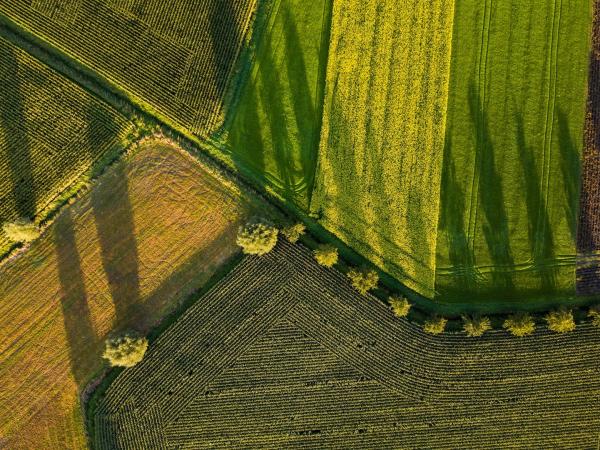
Researchers explored the relationship between organic and conventional farm fields, finding that grouping organic fields together and conventional fields together can eliminate spillover effects that increase pesticide use.
Bren Professor Kyle Meng advised Governor Newsom on California's historic 15-year cap-and-trade extension, calling it "the most important U.S. climate policy for the foreseeable future."
UCSB Bren School professors Roland Geyer, Patricia Holden, Arturo Keller, and Sage Davis featured in PBS documentary examining fast fashion's environmental impact, microplastic pollution, and sustainable textile recycling solutions.
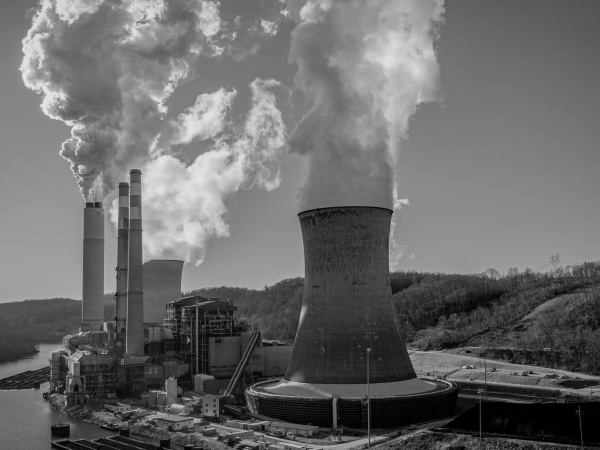
New research outlines a data-driven method to evaluate and retire U.S. coal plants. The study identifies vulnerability patterns, enabling policymakers to plan targeted, efficient coal phaseouts aligned with energy and climate goals.
Scientists explain how climate tipping points such as ice loss, coral decline, and rainforest stress interact within Earth’s systems, highlighting both the scientific uncertainty and opportunities to prevent irreversible change.
Bren School's EDS 240 Data Visualization course teaches Master of Environmental Data Science students to transform complex environmental datasets into compelling visual stories using R programming, ggplot2, graphic design, and alternative grading methods that emphasize skill mastery over traditional grades.
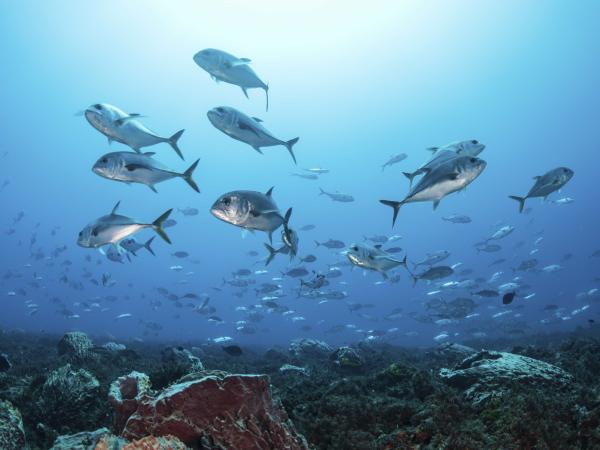
Christopher Costello's groundbreaking Science study using satellite technology and AI proves marine protected areas effectively reduce illegal fishing by 90%, challenging "paper park" criticisms and demonstrating MPAs' crucial role in achieving global 30x30 ocean conservation targets.
UCSB researchers project global ocean impacts will double by 2050, with warming, biomass loss and coastal pressures driving rapid change that threatens marine ecosystems, coastal communities and future ocean sustainability.
New research reveals plants manage water like spendthrifts or savers: global soil moisture data shows grasses use water aggressively, forests conserve it — reshaping drought predictions and climate models worldwide ecosystems dynamics.