Trade-offs associated with marine reserves are believed to have played a key role in the network’s delayed implementation; potential long-term gains in sustainable fishing and the conservation of biodiversity likely generate short-term losses in fishery revenue due to fishery closures. The trade-offs between conservation and livelihood led our team to ask: What are the consequences of delaying the implementation of a reserve network, and how much area should be protected to enhance both fish biomass and catch?
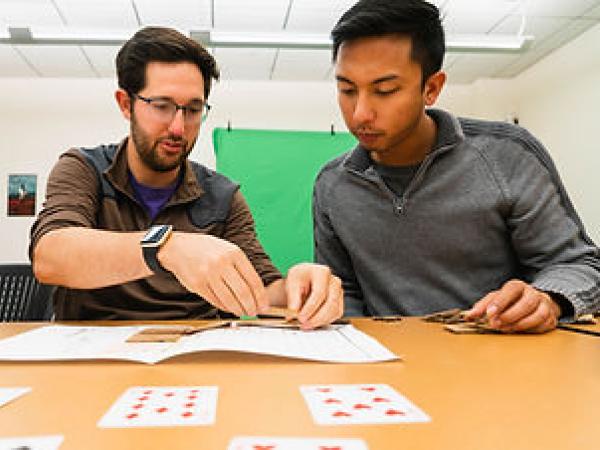
An interactive puzzle game for the California Academy of Sciences that helps players understand where their electricity comes from and empowers them to support a greener grid.
The Nature Conservancy enlisted this group project team to help determine whether investments in natural infrastructure could lower insurance costs to hoteliers and coastal development sites.
A communication strategy to help the California Grizzly Research Network craft a consistent message about their research on grizzly bear reintroduction in California.
This project team worked with The Nature Conservancy, Santa Barbara Botanic Garden, and other island conservation organizations to better understand how climate change will impact island oaks and their recovery.
In California, there is often an excess supply of solar energy in the middle of the day, which can lead to grid curtailment - when clean, renewable energy is not generated to its full capacity or sold to other regions at negative pricing. As more electric vehicles enter the market in California and are poised to charge at the similar peak demand times, utilities are looking for strategies to shift demand of electric vehicle charging to use that excess supply of solar energy. The project's goal was to analyze the potential of electric vehicles as a flexible demand response tool and how to turn a challenge into an opportunity.
A short film examining the vulnerable populations, often minority or low income communities, whose lives are significantly impacted by the secondary effects of natural disasters.
A short film in collaboration with the Honda Marine Science Foundation, exploring ways to restore habitat and bring native California Olympia oyster back to our waterways.
Environmental education curriculum for AP high school students in Santa Barbara, highlighting problem solving and critical thinking related to real world problems.
Campaign concepts pilot-tested with UC students to improve how the University of California Office of the President connects with the student body regarding its Carbon Neutrality Initiative. TomKat Foundation.