This project team worked with The Nature Conservancy, Santa Barbara Botanic Garden, and other island conservation organizations to better understand how climate change will impact island oaks and their recovery.
In California, there is often an excess supply of solar energy in the middle of the day, which can lead to grid curtailment - when clean, renewable energy is not generated to its full capacity or sold to other regions at negative pricing. As more electric vehicles enter the market in California and are poised to charge at the similar peak demand times, utilities are looking for strategies to shift demand of electric vehicle charging to use that excess supply of solar energy. The project's goal was to analyze the potential of electric vehicles as a flexible demand response tool and how to turn a challenge into an opportunity.
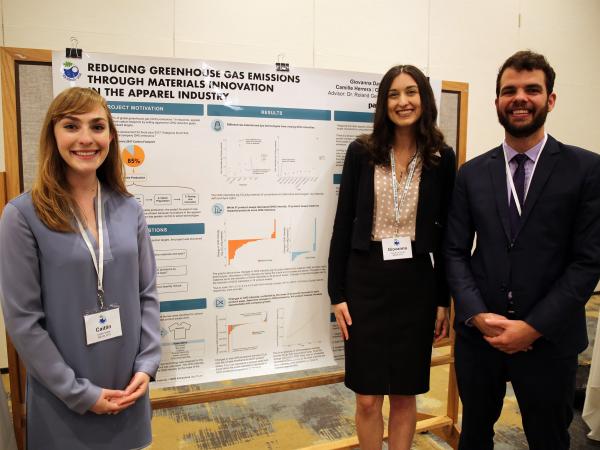
By modeling various product changes out to the year 2035 with company growth, this team identified the material and dye applications with the largest GHG savings for apparel company Patagonia. From this, they sought to develop realistic product change recommendations to decrease the overall environmental impact of Patagonia’s products.
This project aimed to identify synergies and tradeoffs between agricultural practices, ecosystem health, and human wellbeing in Rwanda. Their approach was to examine Vital Sign’s integrated data across a variety of indicators. This analysis was then used to inform agricultural development decisions.
This research group project was commissioned by The Nature Conservancy (TNC) to conduct a watershed analysis of the Carson and Walker river basins of Douglas County, Nevada. They developed a conceptual model of the local watershed, evaluated ecosystem services and the impacts of climate change, as well as performed a market feasibility study to determine if a water fund mechanism would be possible in the region.
This project provided a unique opportunity to use history to inform conservation planning. The property has a long history of human land use, with controlled fires set by the Chumash and centuries of ranching under Spanish land grants. Due to the lasting influence of human disturbance on ecosystem structure and function, a comprehensive understanding of land use history is essential to an effective conservation plan.
Campaign concepts pilot-tested with UC students to improve how the University of California Office of the President connects with the student body regarding its Carbon Neutrality Initiative. TomKat Foundation.