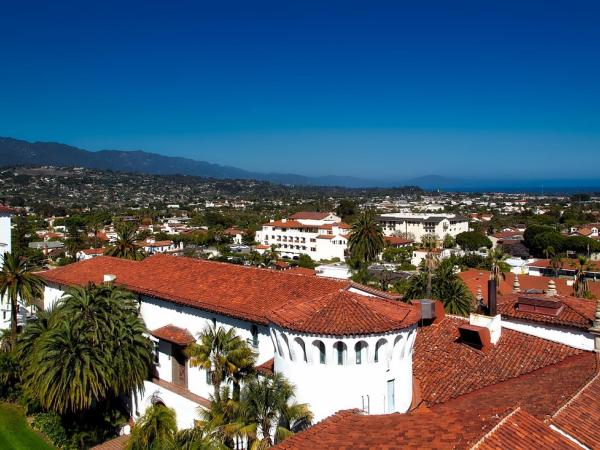
In an effort to address the intersection between California’s current housing crisis and escalating climatic risks, this project supports the Housing Authority of the City of Santa Barbara (HACSB) in the redevelopment of Presidio Springs - a senior low-income housing complex. The team will conduct a material audit of the original development, identify sustainable and climate-resilient building materials, and formulate recommendations for green design strategies to reduce both the embodied and operational carbon footprint of the complex.
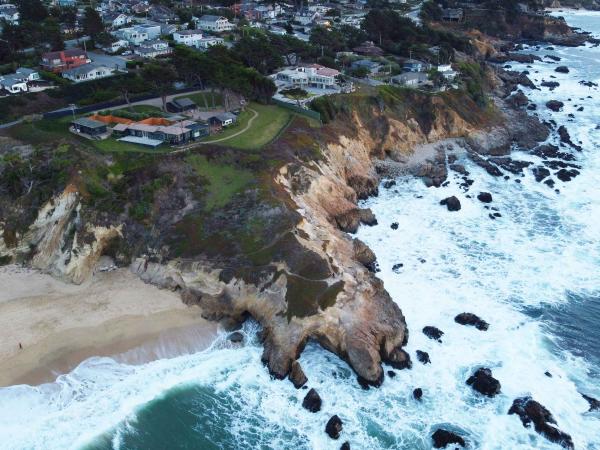
This project addresses the growing challenge of managing coastal retreat in California due to rising sea levels and extreme weather events. Beaches, wetlands, infrastructure, and private property are all at risk, and while traditional adaptation strategies like seawalls and beach nourishment offer temporary relief, they often come with significant ecological and social trade-offs. Managed shoreline retreat—strategically relocating infrastructure and development away from vulnerable shorelines—offers a more sustainable long-term solution, but it remains underused due to political resistance, high upfront costs, and a lack of clear guidance for implementation.
Coral reefs around Mo’orea, French Polynesia, have not recovered as expected after a major marine heatwave in 2019. This project will identify what is limiting recovery and help inform strategies to support healthier reefs in the future.
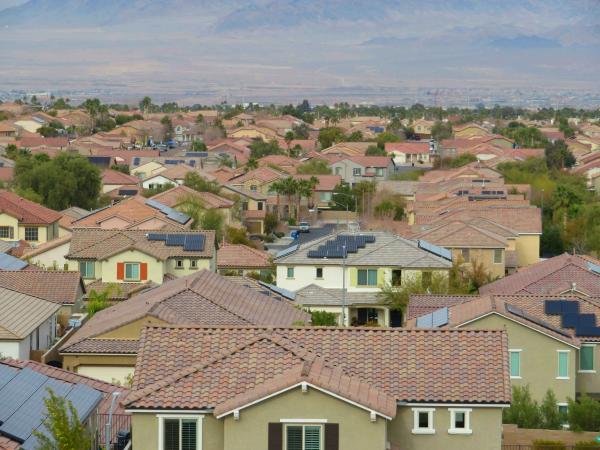
As California leads the country in a shift towards more sustainable energy generation sources with electrification playing a massive role, what are the technological, social, policy, and economic barriers to electrification on a community scale? How can electrification impact and benefit disadvantaged communities? Previous studies on full neighborhood electrification and decarbonization have attempted to answer these questions but have never fully characterized the effects and interactions between gas and electric systems.
Groundwater is a critical water source for agriculture in hyper-arid regions, but increasing irrigation often depletes it faster than it can be replenished. This project will create an accessible, reproducible workflow using satellite data to analyze how agricultural water use relates to groundwater decline, helping researchers and decision-makers support more sustainable water management.
Urban watersheds face ongoing pollution challenges, especially from urban runoff. Heal the Bay is a Los Angeles-based organization that has been monitoring water quality at local beaches for decades, and expanded their efforts to Los Angeles (LA) County rivers in the last ten years. Our group’s objectives are to analyze the last ten years of water quality data from Heal the Bay’s monitoring programs to investigate the water quality in areas where stormwater capture projects have been implemented.
France’s vineyards are increasingly threatened by climate change and disease, leading to long-term losses of grapevines. This project will use high-resolution geospatial data to identify and measure missing vines, providing a scalable and reproducible approach to support vineyard monitoring and long-term management decisions.
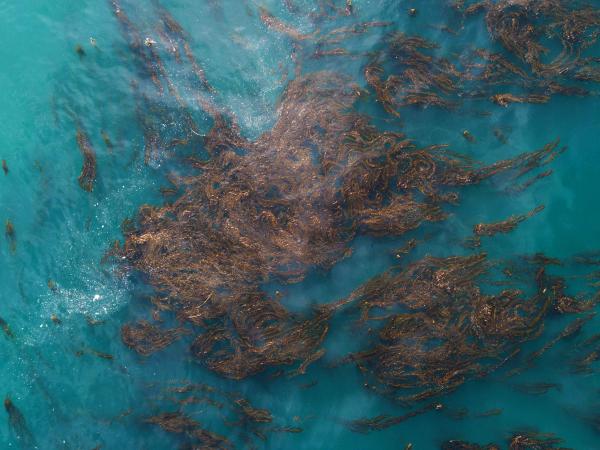
Kelp Help aims to close critical gaps in kelp forest monitoring and restoration by leveraging Unmanned Aerial Vehicle (UAV) technology to improve the detection, monitoring, and analysis of kelp canopy coverage and condition.
Small-scale energy technologies like rooftop solar and electric vehicles are key to decarbonizing energy systems, but grid capacity to support these technologies may not be distributed equitably across communities. This project will develop an accessible workflow that combines grid infrastructure and socioeconomic data to help identify inequities and support a fairer transition to clean energy.
This project explores the potential to repurpose marine waste streams into sustainable, non-synthetic fertilizers or soil amendments for home gardeners and small-scale agriculture. Our initial business model centers on capturing and diverting marine waste before it is discarded, thus reducing environmental harm while creating a locally sourced, value-added product.
Wildfires are an increasing threat in the western U.S., and understanding community and ecosystem resilience is critical for reducing risk. This project will create an open-source tool that makes wildfire resilience data easier to access and use, helping researchers and practitioners support better preparedness and recovery.
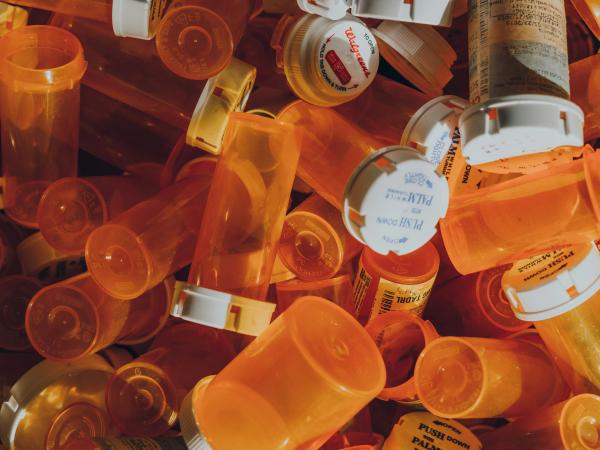
The U.S. healthcare industry generates approximately 6 million tons of waste annually, which is nearly equivalent to the country of India’s entire annual waste production. SustainRx aims to equip hospitals and healthcare providers with a centralized way to track, reduce, and manage medical waste without compromising patient safety. The project will help eliminate waste at its source using a centralized, data-driven platform that enables healthcare organizations to monitor procurement and disposal patterns, assess inefficiencies, and receive actionable waste reduction recommendations.
Environmental reviews in California rely on accurate species data, but current workflows are time-consuming and difficult to reproduce. This project will create an automated system that streamlines species data management, helping biologists make more consistent and effective conservation decisions.
The project’s aim is to find a new, safe and sustainable alternative to the synthetic hair products sold in the beauty industry. Focusing on the intersection between public and environmental health, ReNew’s goal addresses the harms affecting the current consumer base, specifically Black and Black mixed-race women, girls and other femmes.
Hydropower is a key renewable energy source, but expanding it can harm rivers and ecosystems if not carefully planned. This project will estimate how much hydropower can be developed sustainably worldwide and share the results through an interactive tool to support climate and conservation goals.
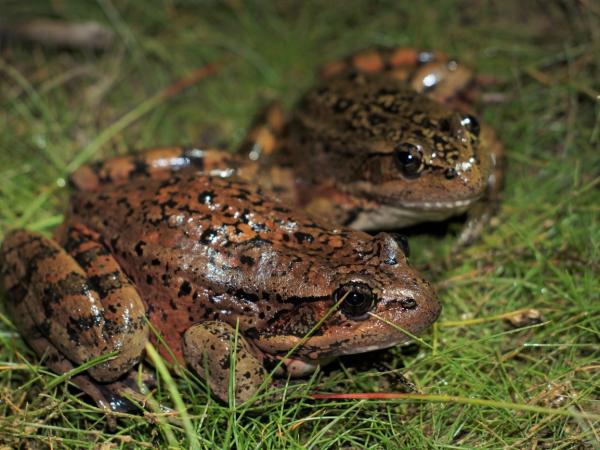
This project aims to evaluate the feasibility of CRLF reintroduction by assessing habitat suitability and identifying the physical, biological, and regulatory requirements for success. As part of this assessment, our team will collect on-farm data for a variety of variables, including pond water quality and surrounding vegetation and wildlife.
California’s 30×30 initiative aims to protect biodiversity, but decision-makers need better evidence to guide conservation investments. This project will use bird observation data to compare biodiversity trends in protected and unprotected areas, helping inform more effective conservation strategies across the state.
For over 450 years, Pilcomayo river basin has been heavily contaminated by mining waste originating from the Potosí region, including toxic heavy metals and acidic byproducts. Advanced Minerals Technology S. Korea, Inc. (AMTSK) is taking a dual approach to address the contamination issue: environmental remediation and treatment of affected populations.
The City of Santa Barbara has adopted an aspirational climate goal to achieve carbon neutrality by 2035. Decreasing natural gas use would reduce the City’s overall emissions; thus, converting existing residential buildings to all-electric systems would bring the City closer to carbon neutrality. To assess the feasibility of different electrification options, this project will review best practices from residential buildings' electrification in other jurisdictions. Furthermore, the project will create an economic model to calculate greenhouse gas reductions and the lifetime financial savings from electrification.
This project is a partnership between UC Santa Barbara’s Bren School of Environmental Science and Management and Sequoia Riverlands Trust (SRT) to create a regional restoration plan for the central San Joaquin Valley.